


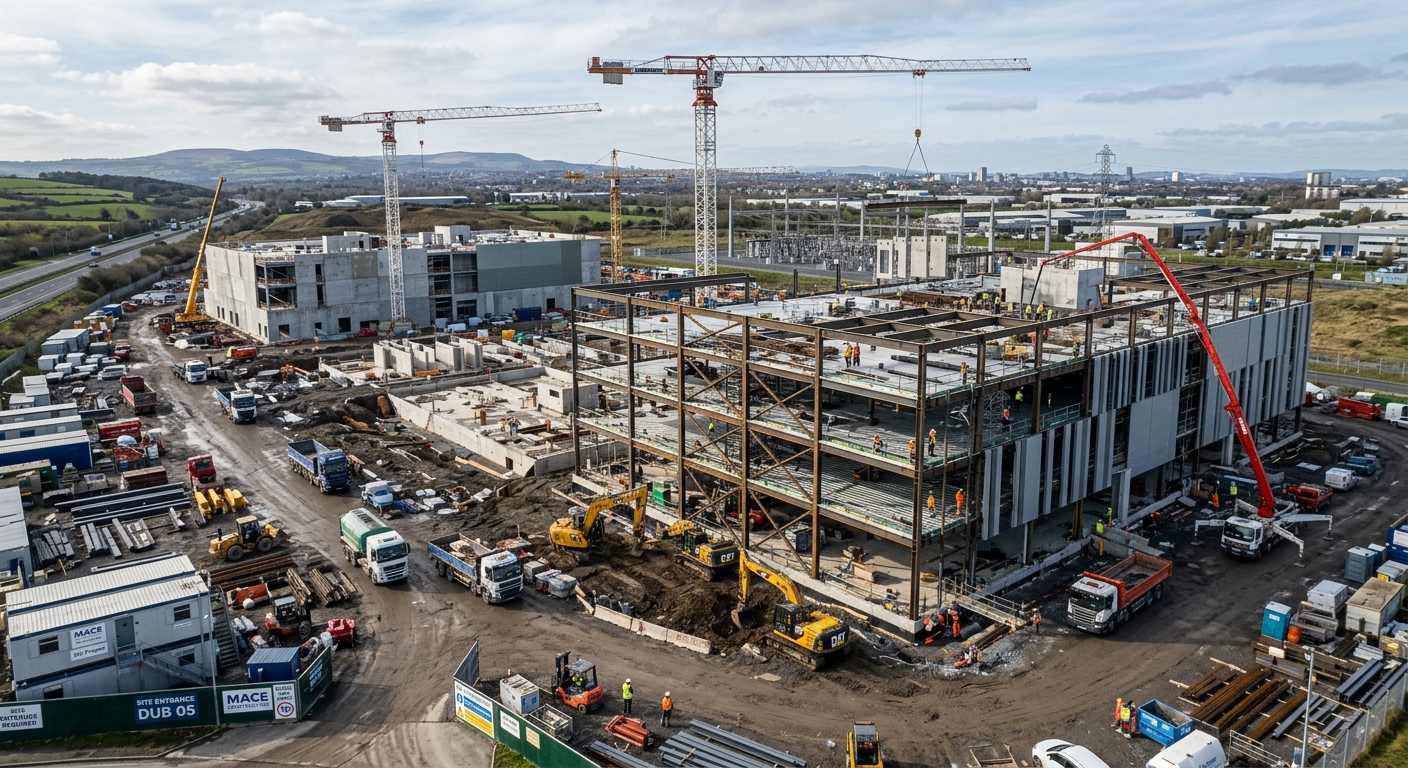
The scale of money going into European data centres is no longer the headline on its own. August's story was the state moving from spectator to dealmaker, using planning, public funds, tax and land to decide where the capital lands. Here's the month.
The number behind everything
Europe's hyperscale data centre market was valued at around $52 billion in 2025, projected to reach roughly $140 billion by 2031.
The European Data Centre Association puts the investment needed at €176 billion cumulatively from 2026 to 2031.
In short: a decade of infrastructure spending, arriving in a few years.
So let's break it down per country:
Nordics
Pure Data Centres Group's Seinäjoki (Finland) campus leads, first phase over €1.5 billion for 110MW, scaling toward a €7.5 billion, 550MW+ site. TikTok has separately backed builds in Lahti and Kouvola at around €1 billion each.
Finland moved data centres to the higher electricity tax rate on 1 July, with a replacement support scheme due in autumn 2026 and its form still being drafted.
Norway saw two operator moves: Microsoft reportedly bought a 64-acre plot in Sandnes for a 25MW facility, and Nscale and Nordkraft formed Nordscale Operations to run data centre operations in Narvik.
Sweden stayed the largest Nordic market, and one of Europe's largest by investment, roughly 44 to 45% of Nordic investment and power capacity.
United Kingdom
England published a revised National Planning Policy Framework on 17 August, strengthening planning support for data centres.
On 28 August, the government rejected calls for a moratorium on new large approvals.
Public money followed: two data centres in Scotland's North Lanarkshire AI Growth Zone secured a £300 million package backed by the National Wealth Fund.
That capacity is contracted to AI cloud firm CoreWeave on a 15-year lease.
Ireland
Ireland's connection framework kept redirecting capital to regional sites rather than Greater Dublin.
New Dublin applications remain effectively paused to 2028.
The region added only 11.4MW in the first half of the year.
France and Southern Europe
France competed on inputs it controls, pairing state-backed land with nuclear power.
Its announced numbers led Europe: SoftBank committed up to €75 billion for 5GW of capacity, and Data4 confirmed a €5 billion campus at Escaudain.
In Spain, a proposed €3 billion AI campus near Mora advanced through regional permitting, built around on-site power.
Nebius launched a European AI infrastructure company headquartered in Amsterdam.
What it means for the work
As governments co-fund and steer, the pipeline gets more real and more accountable. That lifts demand for the people who convert committed capital into a working facility:
Quantity surveyors and commercial managers holding budgets across multi-year AI campuses
Project controls staff planning to a funded start date
Construction leaders delivering under public and private scrutiny at once
The money is committed. The people who convert it are the constraint worth watching.
-XHuMLSBTEsOkLAspIawnVurZQ9tCkj.webp)