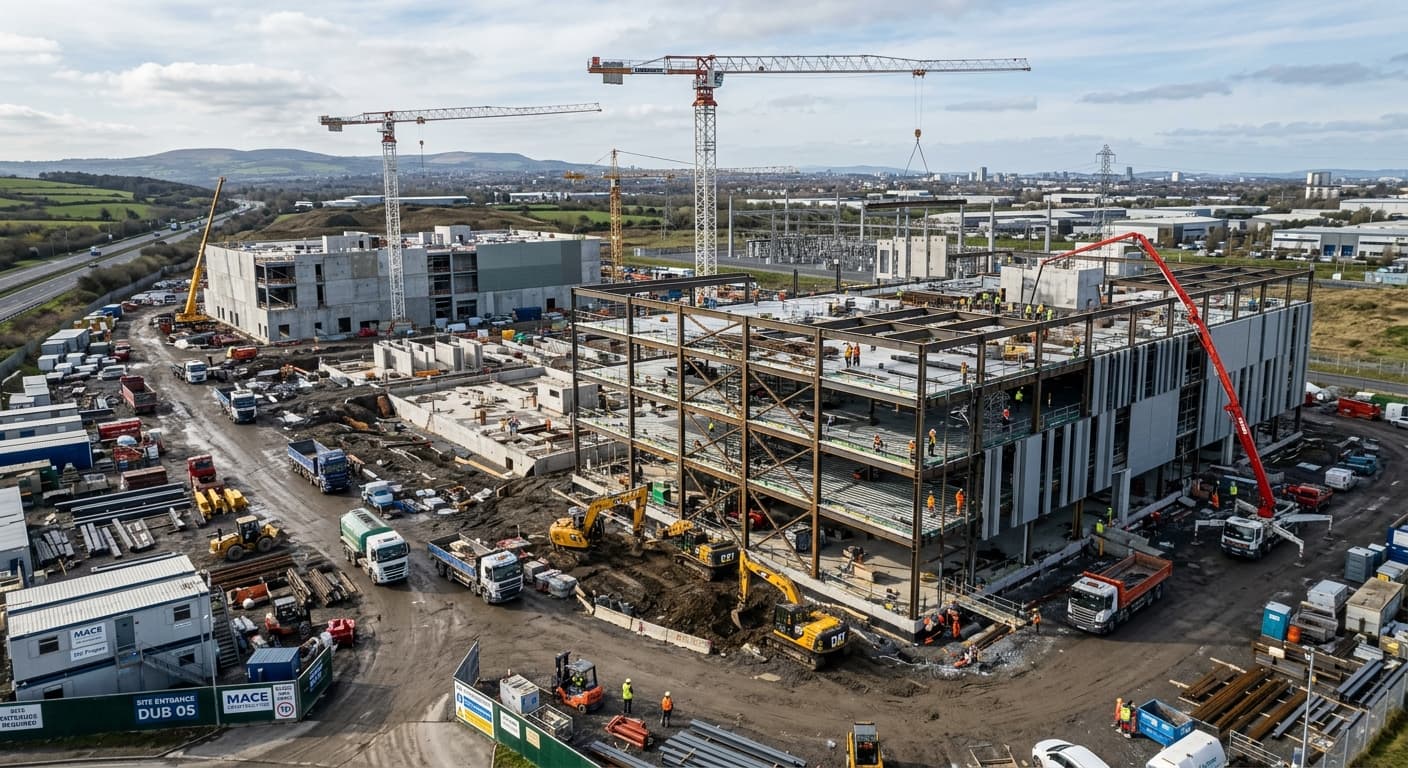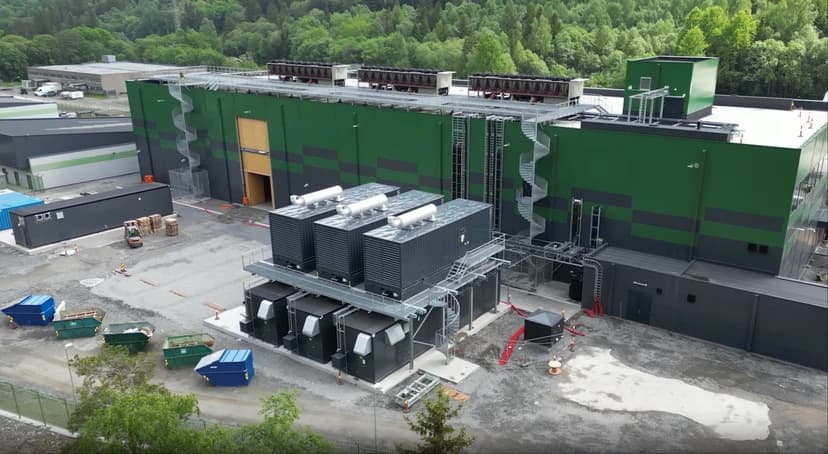



The Nordics have quietly become one of the busiest data center regions in Europe. Cheap renewable power, a cool climate and serious investor money are turning Norway, Sweden and Finland into a magnet for AI infrastructure.
Analysts at Bloomberg Intelligence estimate that Nordic data center power demand could rise fourfold by 2032. For anyone who builds, wires, cools or runs these facilities, that is not just a headline. It is a decade of work.
Here is what is driving the growth, where the projects are, and which skills the region needs most.
Key takeaways
Nordic data center power demand could rise fourfold by 2032, according to Bloomberg Intelligence.
Billions are already committed in Norway, Sweden and Finland by Google, Nscale, atNorth, EcoDataCenter and Verne.
A single large campus can need around 1,500 people during construction.
Electrical, mechanical, commissioning and operations professionals are in the highest demand.
Why the Nordics, and why now
Large AI workloads need three things: a lot of power, efficient cooling and space to grow. The Nordic countries tick all three boxes.
Renewable power: hydro and wind make up a large share of the grid in Norway and Sweden, which matters to operators with climate targets.
Natural cooling: lower average temperatures cut the energy needed to keep servers cool.
Grid capacity: Norway alone has 3.5 GW of capacity reserved for data centers, with a further 5.4 GW waiting in the queue (Statnett, via Argus Media, March 2026).
Political stability and strong digital infrastructure, which make long term investment easier to justify.
The numbers back it up. Statnett projects that data centers across the region will use around 28 TWh of electricity a year by 2030, up from 8 TWh in 2024. That would lift their share of total Nordic demand from 2% to 5%.
The money flowing into Nordic data centers
Over the past year, capital has moved fast. Here are the projects shaping each market.
Data centers in Norway
Nscale raised $1.1 billion in a Series B round led by Aker in September 2025, one of the largest raises in European AI infrastructure. Its 230 MW site in Narvik is set to host more than 30,000 NVIDIA GPUs for Microsoft during 2027.
atNorth is building in Haugaland, starting at 120 MW and growing to 350 MW.
Ardian pledged more than €3 billion through Verne, targeting 200 MW in Norway by 2029 and 350 MW in Denmark.
Data centers in Sweden
Mistral and EcoDataCenter are building a €1.2 billion facility in Borlänge, with the first building scheduled to open in 2027.
EdgeConneX is planning a campus in Skellefteå, which the company expects to employ around 1,500 people during construction.
Data centers in Finland
Google announced €13 billion of investment in Finland across 2027 and 2028, covering its Hamina site plus Muhos, Vaala and Kajaani.
atNorth is developing Salo, starting at 75 MW and growing to 230 MW.
Grid operator Fingrid reports signed connection agreements for nearly 5 GW of planned data center capacity.
Behind much of this sits a big ownership change: CPP Investments and Equinix completed their $4 billion acquisition of atNorth in September 2026. atNorth runs eight operational facilities across the region.
It is not all smooth sailing
Rapid growth brings real constraints, and it is worth being honest about them.
Grid pressure: Sweden's grid operator expects the regional power surplus to shrink from around 53 TWh in 2026 to 29 TWh by 2030.
Policy shifts: Finland removed data centers from its reduced industrial electricity tax rate in July 2026, and Denmark's new emergency grid rules place most large data centers in the lowest priority category.
Pre leasing: industry analysts have noted that only a small part of Finland's announced pipeline is pre leased, so not every project will move at the same speed.
Even so, the projects already funded and under construction represent years of steady work for skilled professionals.
The real bottleneck: people
Power and capital get the headlines. Talent is what decides whether a project goes live on time.
A recent industry survey by Onnec suggests the Nordics face the highest retirement share of any region it studied, with around 28% of the data center workforce expected to retire between 2031 and 2036. At the same time, every new campus needs hundreds of skilled people to build it and a permanent team to run it.
What kind of jobs are at a data center?
Strong, long term demand exists for experienced professionals in roles such as:
Electrical engineers and electricians, including high and low voltage specialists
Mechanical and HVAC engineers, especially with liquid cooling experience
Commissioning engineers and test managers
Critical facilities and data center operations technicians
Project managers, construction managers and planners
QA/QC inspectors, HSE advisors and document controllers
What it takes to work on a Nordic data center project
Each Nordic country has its own rules, especially for electrical work. Before you apply, it helps to know the basics.
Norway: electricians generally need their qualifications recognised by DSB (the Norwegian Directorate for Civil Protection) before working on installations.
Sweden: electrical installation work is regulated by Elsäkerhetsverket, the Swedish National Electrical Safety Board.
Finland: electrical work qualifications are overseen by Tukes, the Finnish Safety and Chemicals Agency.
Site safety and construction certificates are usually required on top of trade qualifications, so check each vacancy for specifics.
English is widely used on international data center sites, although some roles ask for a Scandinavian or Finnish language. Each job description will tell you what is needed.
Our country guides go deeper on each market:
What this means for your next move
If you work in data center construction or operations, the Nordics are one of the most promising places in Europe to build your career over the next few years.
Large, long running projects mean more stability than short one off contracts.
Exposure to AI scale builds and advanced cooling adds weight to your CV.
Skills in short supply tend to come with stronger offers.
At DC People, we focus only on data center talent. We help technicians, engineers and construction professionals find their next role on projects across Europe, including the Nordics.
Ready to see what is open? Browse our current vacancies and find your next role.
Frequently Asked Questions
Why are data centers growing so fast in the Nordics?
The Nordics offer renewable power, natural cooling, available grid capacity and political stability. AI workloads need large amounts of energy and cooling, which makes Norway, Sweden and Finland attractive for new data center campuses.
How much could Nordic data center demand grow?
Bloomberg Intelligence estimates that Nordic data center power demand could rise fourfold by 2032. Statnett projects regional data center electricity use of around 28 TWh a year by 2030, up from 8 TWh in 2024.
How many jobs does a data center create?
It varies by size and phase. As one Nordic example, EdgeConneX expects around 1,500 people to work on building its Skellefteå campus in Sweden, and around 1,000 direct and indirect jobs once the first stage is operating.
What kind of jobs are at a data center in the Nordics?
Electrical engineers and electricians, mechanical and HVAC engineers, commissioning engineers, critical facilities technicians, project and construction managers, planners, QA/QC inspectors, HSE advisors and document controllers are all in demand.
Which certifications do I need to work on a data center in Norway, Sweden or Finland?
Electrical work is regulated nationally: by DSB in Norway, Elsäkerhetsverket in Sweden and Tukes in Finland. Most sites also require safety and construction certificates. Certifications matter because they prove you can work safely on live, high risk sites. Each vacancy lists the exact requirements.
Do I need to speak a Nordic language?
Not always. English is common on international data center projects, but some roles ask for Norwegian, Swedish or Finnish. The job description for each vacancy states the language requirements.
Does DC People offer visa sponsorship?
No. DC People does not provide visa sponsorship or work visas, so you need the right to work in the country where the role is based.
Are my foreign qualifications recognised in the Nordics?
Often they are, but electrical qualifications usually need formal recognition by the national authority before you can work independently. Transferable experience from data center, industrial or large construction projects is highly valued.
Where can I find open data center jobs in the Nordics?
All current DC People vacancies are listed at careers.dc-people.com. Perks and benefits are listed in each vacancy's job description.